
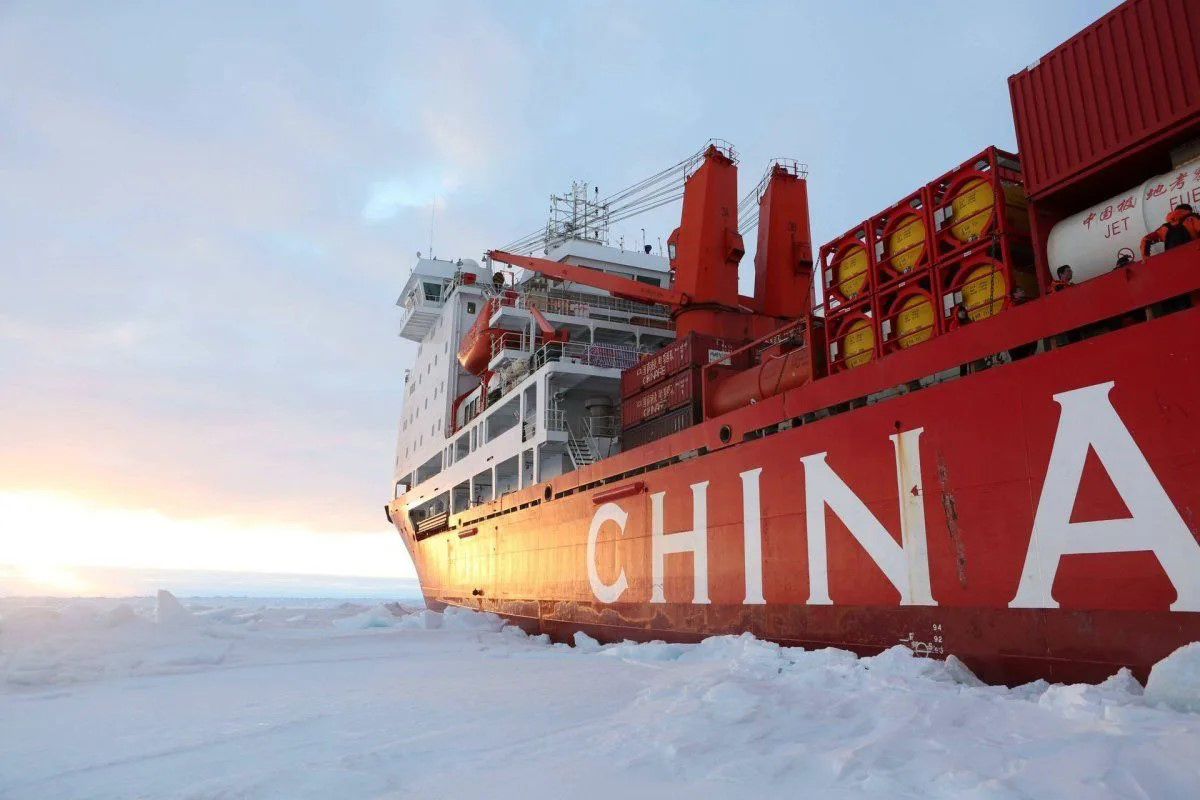
Chinese state media describe the launch of a container line along the Northern Sea Route as a shift in global shipping “from the era of canals to the polar era.” Severny Gorod reviewed articles published in recent years by the Xinhua news agency and the newspapers Global Times, China Daily and People’s Daily, and reports on how Beijing sees its own place in the development of the Russian Arctic.
From an idea to a white paper
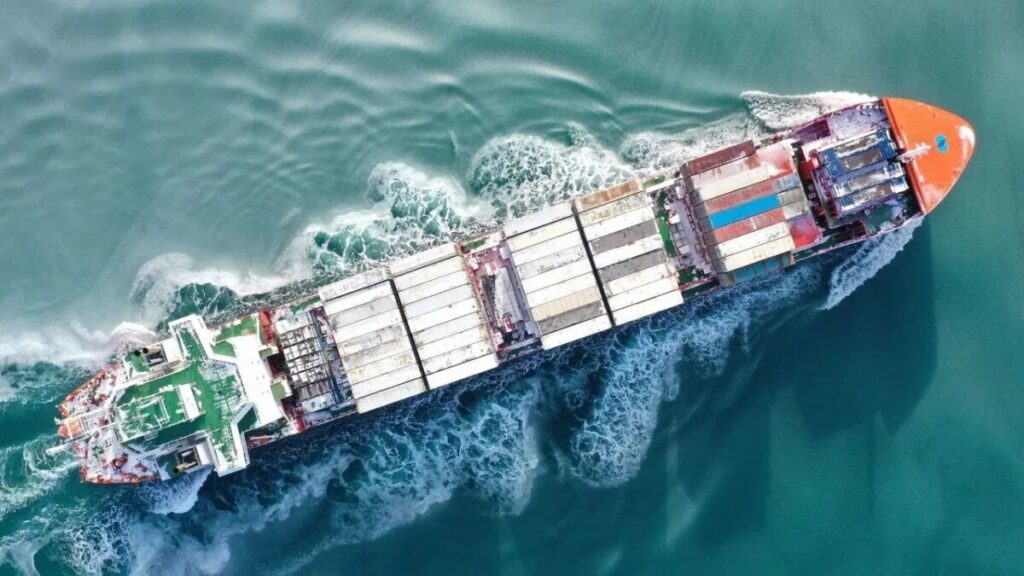
The term “Ice Silk Road” was first used by Chinese President Xi Jinping in July 2017, during a visit to Russia, a Global Times editorial recalls. In January 2018, China published a white paper on its Arctic policy: the country declared itself “an important stakeholder in Arctic affairs” and invited partners to build a “Polar Silk Road” together — developing shipping routes, infrastructure, oil, gas and other resource extraction, fisheries and tourism in the Arctic.
The official position was set out in September 2025 by Chinese Foreign Ministry spokesperson Lin Jian: “China stands ready to work with Russia, other Arctic states and interested parties to jointly advance the development and study of the routes and to protect the environment” (quoted by Global Times).
The money is already in Yamal gas
The first major Chinese energy project in the Russian Arctic, according to the Chinese press, is Yamal LNG. As China Daily reports, the national oil and gas corporation CNPC bought a 20 percent stake in the project in 2013 for 5.4 billion dollars, while the state-owned Silk Road Fund acquired a further 9.9 percent in 2015. The first shipment of liquefied natural gas from Yamal arrived at the Chinese port of Nantong in July 2018, seven months after the plant came online.
Containers take the Arctic route
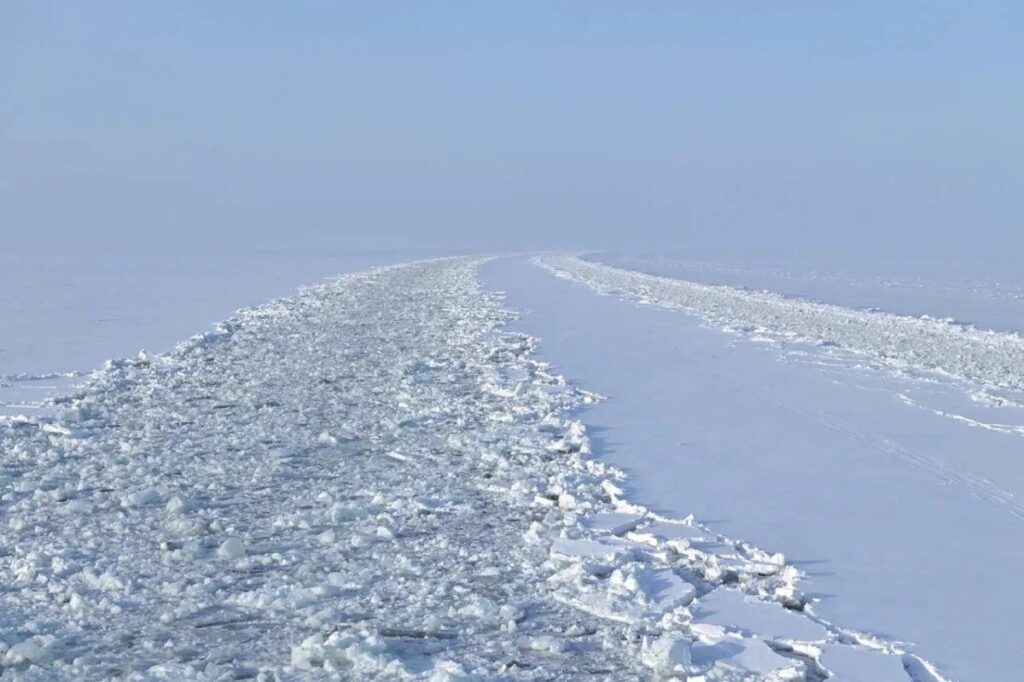
The biggest Arctic story of 2025 for the Chinese media was the first China–Europe container express service via the Northern Sea Route. The vessel Istanbul Bridge left the port of Ningbo-Zhoushan on September 23 carrying 4,890 containers — solar panels, energy storage units and parcels from online retailers. It reached Felixstowe in the United Kingdom in 20 days — compared with roughly 40 via the Suez Canal and 50 around the Cape of Good Hope, Xinhua reported. The line’s operator, Sea Legend Shipping, pledged to make summer sailings regular in 2026 — once every one to two weeks — and, in the longer term, to achieve year-round navigation.
Global Times called the voyage historic: just 10 years ago, the Western shipping industry believed containers would not travel through the Arctic before 2040–2050. By the operator’s estimates, the route also has an environmental argument in its favour: carbon dioxide emissions along the Arctic route are roughly 30 percent lower than via Suez.
Training sailors in Russia
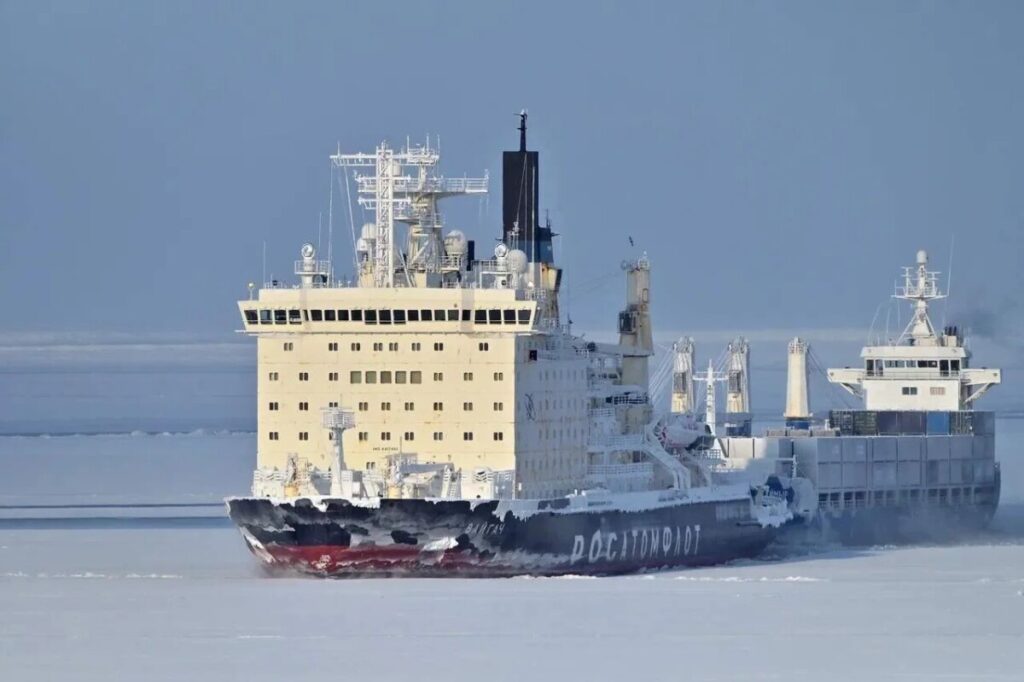
Cooperation extends to personnel as well. In November 2025, in Hangzhou, during Russian Prime Minister Mikhail Mishustin’s visit to China, the two countries signed a memorandum on training Chinese sailors for navigation in polar waters: they will be trained at Russian maritime universities, including the Admiral Makarov State University, Global Times wrote, citing Russia’s Ministry of Transport.
Cargo traffic along the Northern Sea Route, meanwhile, is growing: in 2024 it reached 37.9 million tonnes, and for the full year of 2025 Rosatom expected a further increase of 20 percent. Xinhua cited these figures with reference to the head of the state corporation, Alexei Likhachev.

No rose-tinted glasses
That said, more cautious assessments also appear in the Chinese press. Writing in a column for China Daily, expert Hong Nong notes that for China the Northern Sea Route is a valuable alternative to Suez but not a vital necessity, and that Chinese companies operating in the Arctic risk falling under Western sanctions. Extracting resources in extreme cold is expensive, and neither Beijing nor Moscow yet possesses all the necessary technologies — which means they will have to develop them together.
Text: Ekaterina Veresova. Photos: China’s Xinhua news agency and Anton Zaitsev


